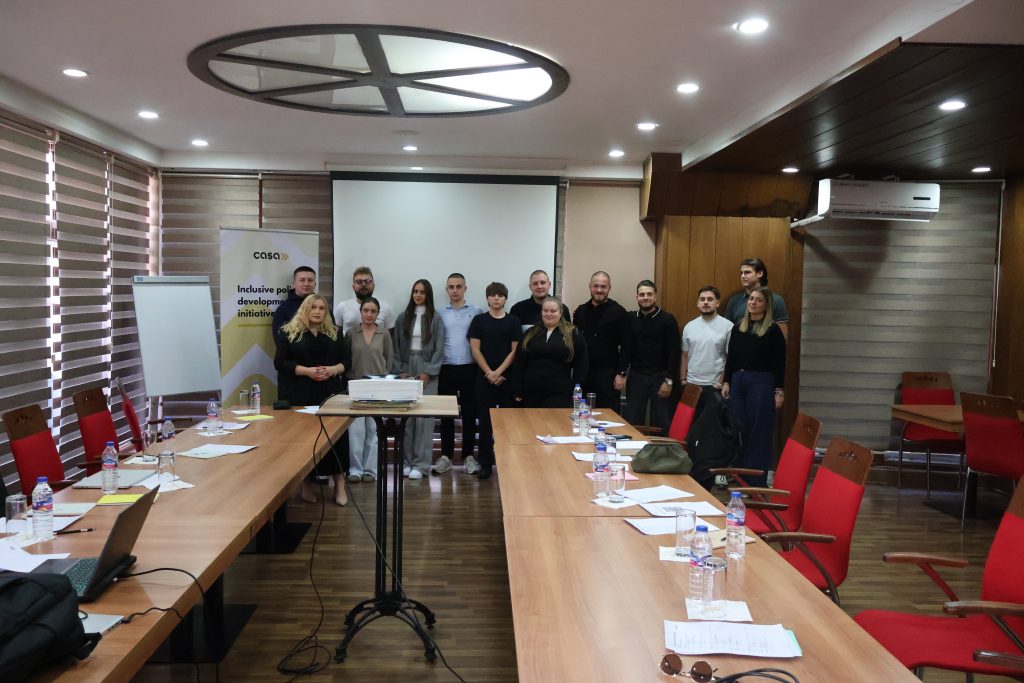
NGO CASA brought together young activists from Serbian communities for the training “Strategic Advocacy in Practice”, held from 2 to 4 October 2026 at Hotel Sharri. The three-day training focused on designing advocacy campaigns and preparing practical steps for their implementation.
Building on previous learning and participants’ experiences in their communities, the training supported teams in turning local priorities into specific advocacy requests. Participants explored what decisions, policies or practices they wanted to change, what solutions they proposed and how to present these requests to the relevant institutions.
Through practical exercises and group work, teams examined the evidence behind their chosen issues, identified information gaps and developed measurable campaign objectives. They also analysed decision-making processes, mapped potential allies and considered how community representatives could contribute to achieving the proposed changes.
A key part of the programme focused on choosing advocacy tactics and preparing for engagement with decision-makers. Meeting simulations gave participants an opportunity to practise presenting their requests, responding to objections and seeking agreement on concrete next steps.
Teams then developed campaign action plans, setting out activities, responsibilities, deadlines, resources and indicators of progress. Peer feedback helped them review their strategies and identify areas that needed further work.
The final day focused on preparing for implementation. Participants examined how delays, limited resources or a lack of institutional response could affect their campaigns, considered alternative approaches and outlined priorities for the first 30 days of action. The training concluded with presentations of the campaign plans and agreement on initial steps and team responsibilities.
By connecting community priorities with clear objectives and practical plans, the training supported participants in preparing more focused and coordinated advocacy efforts in their local communities.
This activity is supported by the Kosovar Civil Society Foundation (KCSF) program ‘EJA Kosovo’, co-financed by the Swiss Agency for Development and Cooperation (SDC) and Sweden.